
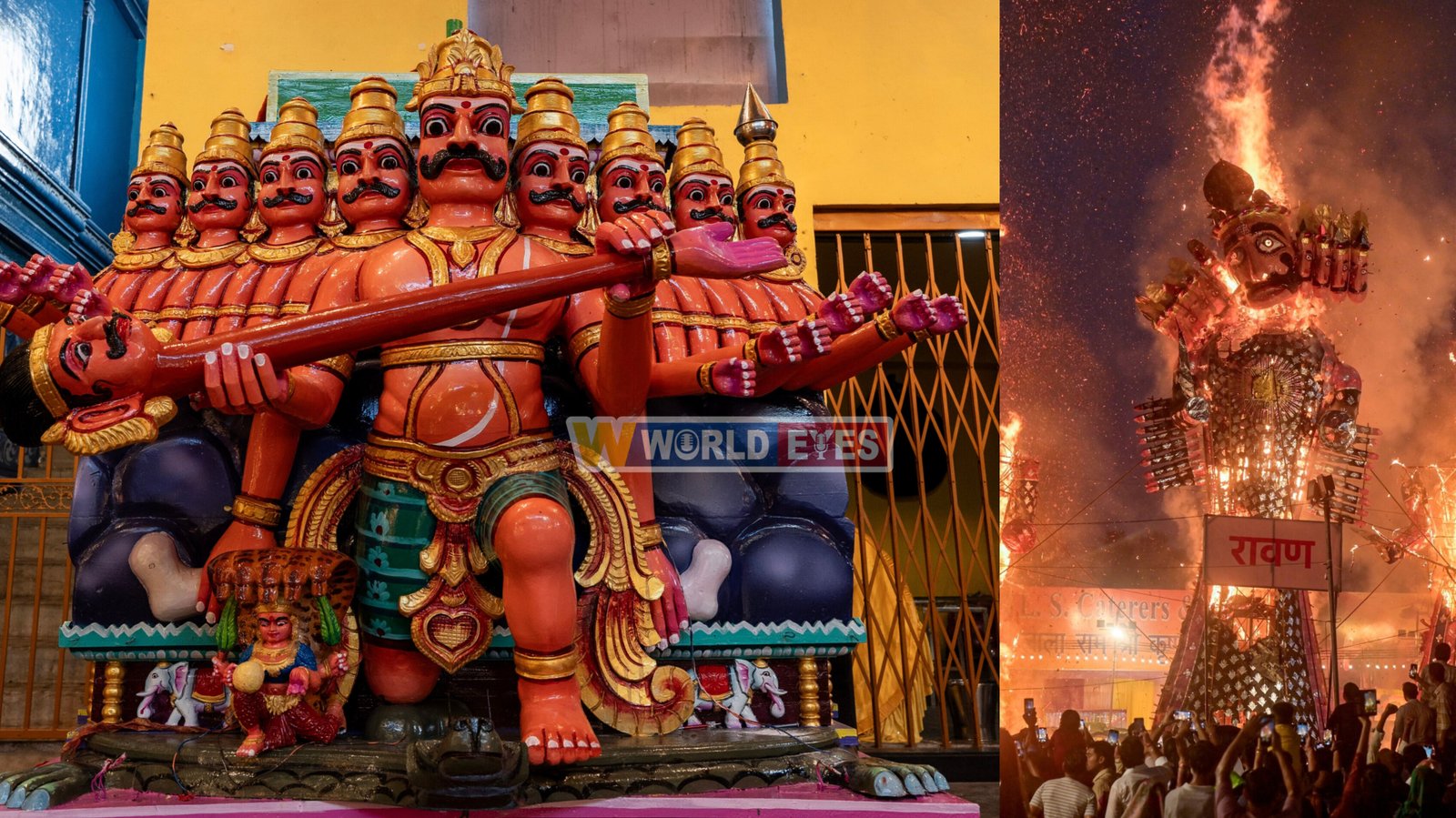
New Delhi: Vijayadashami, popularly known as Dussehra, is celebrated across India as a symbol of the victory of good over evil. On this day, effigies of Ravana, Kumbhakarna and Meghnad are traditionally burned to commemorate Lord Rama’s victory over Ravana.
However, not every part of India follows this tradition. In several places, Ravana is worshipped rather than burned, reflecting distinctive local beliefs, religious traditions and cultural interpretations of the Ramayana.
In these regions, Ravana is remembered not only as the antagonist of the epic but also as a learned scholar, a devoted worshipper of Lord Shiva, a powerful ruler and, in some local traditions, an ancestor or revered family figure.
Here are seven places in India where Ravana holds a special place in local religious and cultural traditions.
1. Bisrakh, Uttar Pradesh
Bisrakh, a village in Uttar Pradesh near Greater Noida, is traditionally associated with Ravana’s father, the sage Vishrava. According to local belief, this connection gives Ravana a special place in the village’s religious identity.
Unlike the widespread tradition of burning Ravana’s effigy on Dussehra, worship and prayers associated with Ravana are observed here. The village’s temples and religious traditions attract attention during the festival because of their distinctive interpretation of the Ramayana.
2. Mandsaur, Madhya Pradesh
Mandsaur is associated with Ravana through local traditions connected to his wife, Mandodari. According to a popular belief, Mandodari was linked to this region, leading some people to regard Mandsaur as Ravana’s in-laws’ home.
In this tradition, Ravana is treated with respect as a son-in-law rather than simply being remembered as the figure whose effigy is burned during Dussehra.
The belief offers a fascinating example of how regional folklore can shape the way people observe major Hindu festivals.
3. Ravan Gram, Madhya Pradesh
Ravan Gram, near Vidisha in Madhya Pradesh, is another place associated with traditions surrounding Ravana worship.
Local beliefs give Ravana a distinctive religious and cultural identity, and worship is reported to take precedence over the customary burning of his effigy during Dussehra.
The village reflects how interpretations of characters from the Ramayana can vary across communities and regions.
4. Kanpur, Uttar Pradesh
Kanpur is home to the well-known Dashanan Temple, dedicated to Ravana. The temple is reported to be around 135 years old and is particularly notable for its Dussehra tradition.
According to local accounts, the temple remains closed for most of the year and opens its doors to devotees on Dussehra, when special prayers are offered to Ravana.
This unusual practice draws attention because the day associated with Ravana’s defeat in much of India becomes an occasion for worship at this temple.
5. Jodhpur, Rajasthan
In Jodhpur, certain communities associate themselves with Ravana through traditions concerning ancestry and lineage.
For these groups, Ravana is regarded as a figure connected to their heritage, and they honour him in accordance with their community beliefs. Some refrain from participating in the customary burning of Ravana’s effigy.
These practices illustrate the diversity of cultural traditions surrounding Ravana and the different meanings attributed to him across India.
6. Kakinada, Andhra Pradesh
Kakinada in Andhra Pradesh is associated with a temple dedicated to Ravana, where traditions emphasise his devotion to Lord Shiva.
Ravana is remembered in these beliefs as a powerful ruler, a scholar and a devoted Shiva worshipper. His penance, spiritual knowledge and religious devotion form an important part of this interpretation of his character.
The tradition highlights aspects of Ravana’s identity that extend beyond his role in the Ramayana’s central conflict.
7. Kangra, Himachal Pradesh
The Kangra region of Himachal Pradesh is also associated with religious beliefs concerning Ravana and his devotion to Lord Shiva.
According to Hindu traditions, Ravana performed intense penance to please Lord Shiva. Some local beliefs also connect him with spiritual liberation.
For devotees who emphasise these aspects of his story, Ravana is remembered as a great Shiva devotee rather than solely as a symbol of evil.
Why Is Ravana Worshipped in Some Parts of India?
The worship of Ravana in certain communities reflects the diversity of India’s religious traditions, regional folklore and cultural identities.
While the burning of Ravana’s effigy generally symbolises the victory of righteousness over wrongdoing, some communities focus on other aspects of his character, including his scholarship, devotion to Lord Shiva, royal lineage and connections with local legends.
These practices do not necessarily represent the views of every resident of the places mentioned. Traditions can differ even within the same town or community.
Dussehra: One Festival, Different Traditions
Dussehra is celebrated in different ways across India, reflecting the country’s rich cultural and religious diversity. For millions of people, Ravana Dahan remains a powerful symbol of the triumph of good over evil.
In other places, however, local traditions preserve a different understanding of Ravana’s legacy.
From Bisrakh and Mandsaur to Kanpur and Kakinada, these customs demonstrate how folklore, faith and regional identity influence the celebration of one of India’s most significant festivals.
Reader Discussion (0)
Leave a Reply
Your email address will not be published. Required fields are marked *