
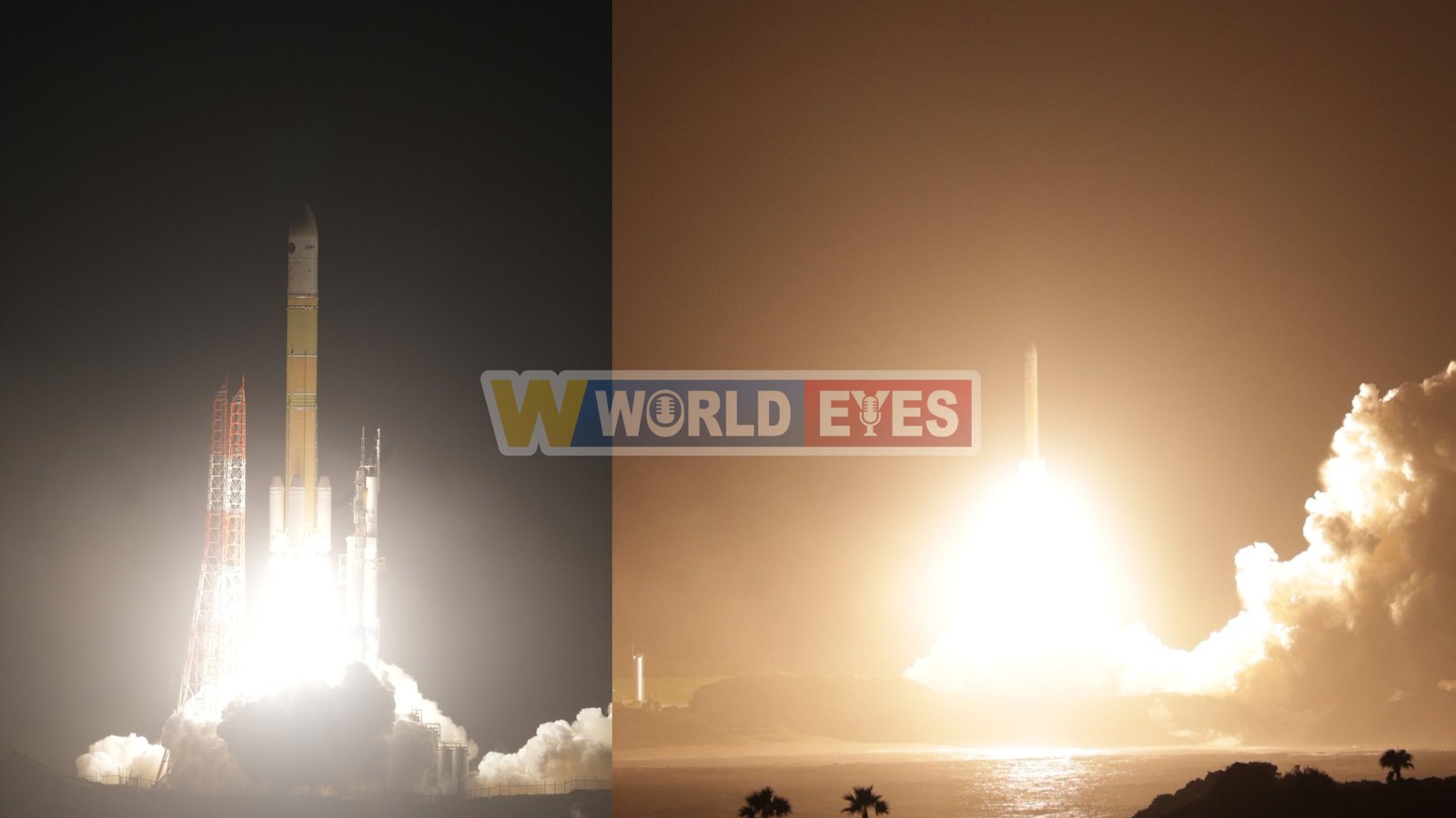
Tokyo: Japan has embarked on an ambitious space exploration mission aimed at collecting samples from Phobos, one of the two small moons orbiting Mars, and bringing them back to Earth.
The Japan Aerospace Exploration Agency (JAXA) launched its Martian Moons eXploration (MMX) spacecraft aboard Japan’s H3 rocket from the Tanegashima Space Center. The mission aims to investigate the origins of Mars’ moons and provide scientists with new insights into the history of the Red Planet and its surrounding environment.
Five Space Agencies Join Forces
The mission involves international cooperation, with NASA, France’s National Centre for Space Studies (CNES), the German Aerospace Center (DLR) and the European Space Agency (ESA) contributing alongside JAXA.
The spacecraft is expected to reach the Martian system in 2027, according to the timeline provided in the mission details. It will study Phobos and Deimos, the two moons of Mars, with a particular focus on collecting material from Phobos.
Why Is Phobos Important?
Phobos is the larger of Mars’ two moons and orbits relatively close to the planet. It is approximately 22.5 kilometres across and completes about three orbits around Mars in a single day.
Scientists are interested in understanding whether Phobos formed from material left over from Mars’ formation or was captured by the planet’s gravity. Samples collected by MMX could help answer these questions and improve understanding of the Martian system.
Rover and Lander to Study Phobos
The mission includes a small French-German rover designed to examine the moon’s surface and help scientists understand its terrain. The rover is expected to conduct surface investigations before the main spacecraft attempts its sample-collection operation.
A landing system will gather material from Phobos, with JAXA aiming to collect at least 10 grams of soil and rock samples. The spacecraft is designed to return the samples to Earth in 2031.
A Major Milestone in Space Exploration
No mission has yet successfully returned samples from either of Mars’ moons to Earth. The MMX mission could therefore mark an important milestone in planetary exploration.
The spacecraft will also observe Deimos during its journey, adding to scientific knowledge of Mars’ second moon.
With an estimated cost of around $578 million, the mission represents a major investment in international space science. Its findings could help researchers better understand how Mars’ moons formed and how planetary systems evolve.
Reader Discussion (0)
Leave a Reply
Your email address will not be published. Required fields are marked *