
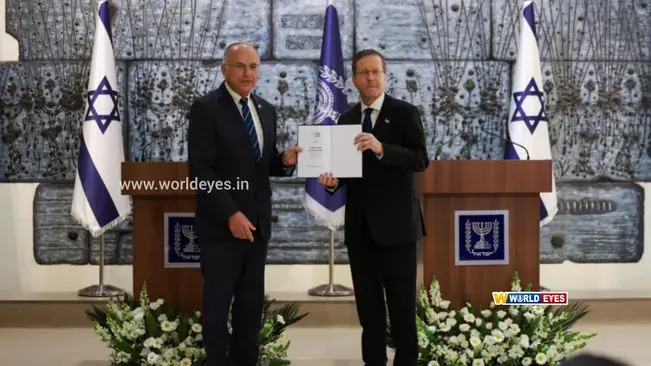
Jerusalem: Israeli President Isaac Herzog on Wednesday formally accepted the certified results of last week's parliamentary elections as legally binding, paving the way for the formation of a new government. Herzog has also begun consultations with representatives of various political parties to determine who has the best chance of forming the next government.
The development comes as a major political setback for Prime Minister Benjamin Netanyahu, whose ruling coalition has lost its parliamentary majority. The election results have also challenged Netanyahu's attempts to question the credibility of the vote.
“Elections are over. It is now time to face reality,” Herzog said, urging political parties to work towards forming a stable government.
Meanwhile, Israel's Central Elections Committee has rejected allegations of widespread electoral fraud. After examining records from 9,069 polling stations, the commission said it found no irregularities that compromised the fairness of the election or changed its outcome.
Supreme Court Justice Noam Sohlberg, who heads the committee, said allegations of foreign interference remain suspicions at this stage. He added that even if some allegations were established, their potential impact on the overall results would be limited.
Sohlberg also warned that creating doubts about election results could damage public confidence in the democratic process.
The parliamentary election, held on October 27, produced a complicated political picture. Neither Netanyahu's bloc nor the alliance supporting his main rival, opposition leader Gadi Eisenkot, secured the 61 seats required for a majority in the 120-member Knesset.
Netanyahu's bloc secured 53 seats, while parties aligned with Eisenkot won 48. Arab-led parties made historic gains, securing a combined 19 seats.
The results have opened the possibility of new political alliances, including potential cooperation between Eisenkot and some Arab-led parties.
Following consultations with party representatives, President Herzog will invite the candidate he believes has the strongest chance of securing a governing coalition to form the next government.
The process could involve several weeks of negotiations. If no candidate succeeds in forming a coalition, Israel may have to hold another parliamentary election early next year.
For now, the country faces a period of political uncertainty, with coalition negotiations expected to determine its next government and leadership.
Reader Discussion (0)
Leave a Reply
Your email address will not be published. Required fields are marked *