
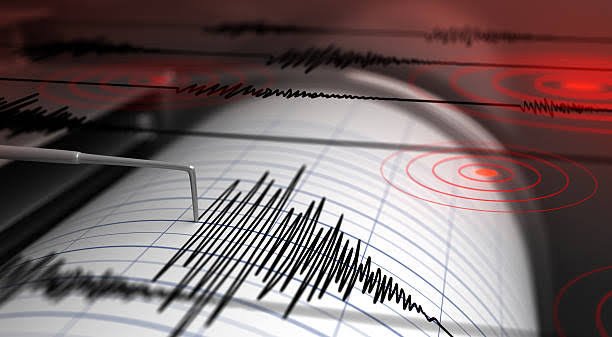
Japan: An earthquake of magnitude 6.3 has been reported in the Bonin Islands region of Japan. Earthquakes occur when stress built up inside the Earth is suddenly released, generating seismic waves that cause the ground to shake.
How Do Earthquakes Occur?
The Earth’s outer shell is divided into large sections known as tectonic plates. These plates move slowly over time. In some areas, they collide, separate or slide past one another. Stress can build up along faults, where rocks may eventually slip and release stored energy, triggering an earthquake.
What Is a Fault Line?
A fault is a fracture or zone of fractures in the Earth’s crust where rocks move relative to each other. When accumulated stress exceeds the strength of the rocks or the friction holding them in place, sudden movement can occur and release energy.
How Is Earthquake Magnitude Measured?
Earthquake magnitude is measured using scales such as the moment magnitude scale, which is widely used by scientists. The Richter scale is a historically important magnitude scale, but it is not the preferred scale for many modern earthquake measurements.
The effects of an earthquake depend on several factors, including its magnitude, depth, distance from populated areas and the quality of local buildings. Even earthquakes of similar magnitude can cause very different levels of damage.
Small earthquakes may go unnoticed, while stronger or shallow earthquakes near populated areas can cause significant damage. People should follow official earthquake and tsunami advisories whenever an event occurs near coastal regions.
Reader Discussion (0)
Leave a Reply
Your email address will not be published. Required fields are marked *