
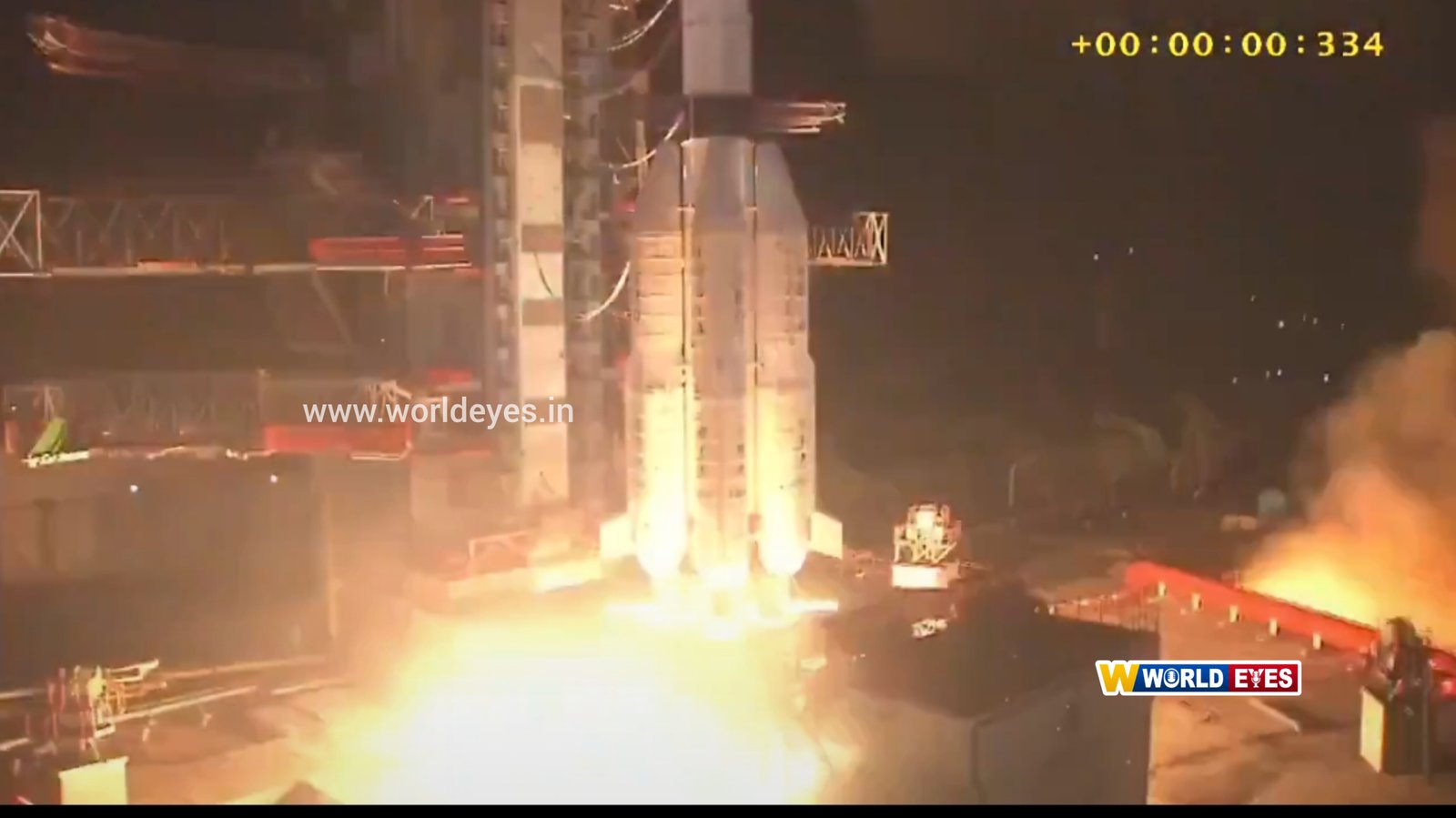
New Delhi: India has taken another major step towards strengthening its indigenous navigation capabilities, with the Indian Space Research Organisation (ISRO) successfully launching its next-generation navigation satellite, NVS-03.
The satellite was launched aboard the GSLV-F18 rocket from the Satish Dhawan Space Centre in Sriharikota on Friday night. Weighing approximately 2,250 kilograms, the spacecraft was successfully placed into a Geosynchronous Transfer Orbit just over 20 minutes after liftoff.
The mission is aimed at strengthening India's Navigation with Indian Constellation, or NavIC, system, which provides positioning, navigation and timing services across the Indian mainland and up to 1,500 kilometres beyond the country's borders.
The upgraded navigation network is expected to support a wide range of applications, including civilian navigation, disaster management, precise timing and strategic requirements.
ISRO Chairman Dr V. Narayanan monitored the launch and confirmed the successful orbital deployment, congratulating the teams involved in the mission.
The launch also marks an important step in advancing India's second-generation navigation satellite programme following the technical setback involving the NVS-02 satellite in 2025.
NVS-03 is currently in its transfer orbit and will undergo a series of orbit-raising manoeuvres using its onboard propulsion system before reaching its designated operational position.
Once operational, the satellite will strengthen the continuity and reliability of India's indigenous navigation services. It will also support the planned deployment of two additional satellites in the next-generation NavIC constellation.
With this mission, ISRO continues to advance India's ambition of building a reliable and independent satellite-based navigation system.
Reader Discussion (0)
Leave a Reply
Your email address will not be published. Required fields are marked *