
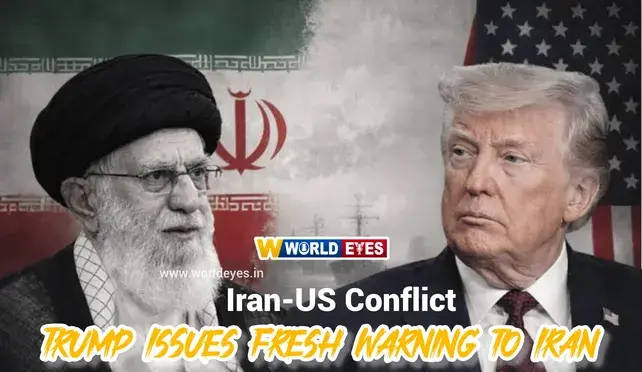
Tensions between the United States and Iran have intensified after US President Donald Trump claimed that American forces had destroyed most of Iran’s nuclear facilities and warned that the remaining targets could be struck within minutes.
Speaking to reporters during a Halloween party at his Mar-a-Lago residence in Florida, Trump said the United States had already taken out Iran’s nuclear infrastructure but still had one or two sites to deal with.
“We still have to take care of, I would say, one or two sites, but we can do that in 10 minutes,” Trump told reporters. He also referred to a suspected underground nuclear facility known as Pickaxe Mountain.
Trump’s remarks come amid fresh warnings from Iran’s Supreme Leader Mojtaba Khamenei. In a statement attributed to him, Khamenei warned that any renewed US or Israeli military attack would trigger an immediate response without geographical limitations.
Iran has also reportedly ordered an update of its military target list to include American and Israeli assets.
When asked whether the United States could resume military operations against Iran as early as this week, Trump dismissed the question, saying that even if such a decision were taken, he would not disclose it publicly.
The US President reiterated that Iran would never be allowed to acquire nuclear weapons. He also claimed that Tehran wanted to reach an agreement with Washington, although he expressed doubts about Iran’s reliability in negotiations.
Meanwhile, Iran’s security chief Mohsen Rezaei described a recent letter from US Vice President JD Vance as a sign of a change in Washington’s approach. According to Iranian state media, Rezaei said he had not yet responded to the letter.
Diplomatic efforts involving countries such as Qatar, Pakistan and Oman have previously attempted to bridge differences between Washington and Tehran. However, disagreements over Iran’s nuclear programme and shipping through the strategically important Strait of Hormuz have continued to complicate negotiations.
With both sides exchanging warnings while diplomatic contacts continue, uncertainty remains over whether the conflict could escalate further or move towards a negotiated settlement.
Reader Discussion (0)
Leave a Reply
Your email address will not be published. Required fields are marked *