
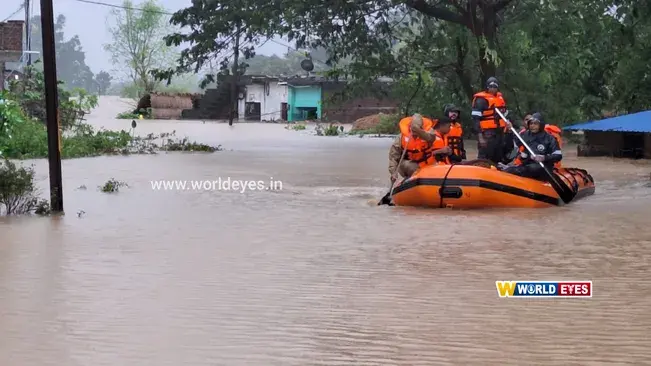
Cyclone Arnab has weakened after crossing the Andhra Pradesh–Yanam coast, but the threat of heavy rainfall, flooding and landslides continues in several southern districts of Odisha. At least seven deaths have been reported in Andhra Pradesh in rain- and cyclone-related incidents, although the state government had initially confirmed five fatalities.
Over One Lakh People Evacuated
More than one lakh people were moved to safer locations in Andhra Pradesh and Odisha as authorities prepared for the cyclone. In Andhra Pradesh, 84,396 people were shifted to 290 relief camps. In Odisha, 43,827 people were accommodated in 634 relief centres, while additional relief facilities remained on standby.
Wind Speeds Reached 150 Kmph
Cyclone Arnab crossed the Andhra Pradesh–Yanam coast on Wednesday, October 28, between approximately 2 am and 8 am. During landfall, sustained wind speeds reached 125–135 kilometres per hour, with gusts of up to 150 kilometres per hour. The system weakened after moving inland.
Power Supply and Road Traffic Disrupted
Powerful winds and heavy rainfall uprooted trees and electricity poles, damaging houses and standing crops. Reports indicated that around 15,000 electricity poles were brought down in Andhra Pradesh, disrupting power supply across affected areas.
Fallen trees and power infrastructure also temporarily disrupted traffic on National Highway 16. The route was reopened after debris was cleared.
Relief and Rescue Operations Intensified
Andhra Pradesh Chief Minister N. Chandrababu Naidu sought assistance from the Centre and directed officials to accelerate relief and restoration operations. More than 30,000 government personnel were deployed for emergency response and recovery work.
Odisha Chief Minister Mohan Charan Majhi said advance preparations and the evacuation of vulnerable residents had helped the state work towards its zero-casualty objective.
Southern Odisha on Alert
Authorities are closely monitoring the situation in Rayagada, Gajapati, Koraput and Malkangiri districts, where heavy rainfall could trigger flooding, flash floods and landslides. Residents have been urged to remain alert, follow official advisories and avoid vulnerable areas.
Although Cyclone Arnab has weakened, the continuing risk of heavy rainfall means that relief teams and district administrations remain on alert across the affected regions.
Reader Discussion (0)
Leave a Reply
Your email address will not be published. Required fields are marked *