
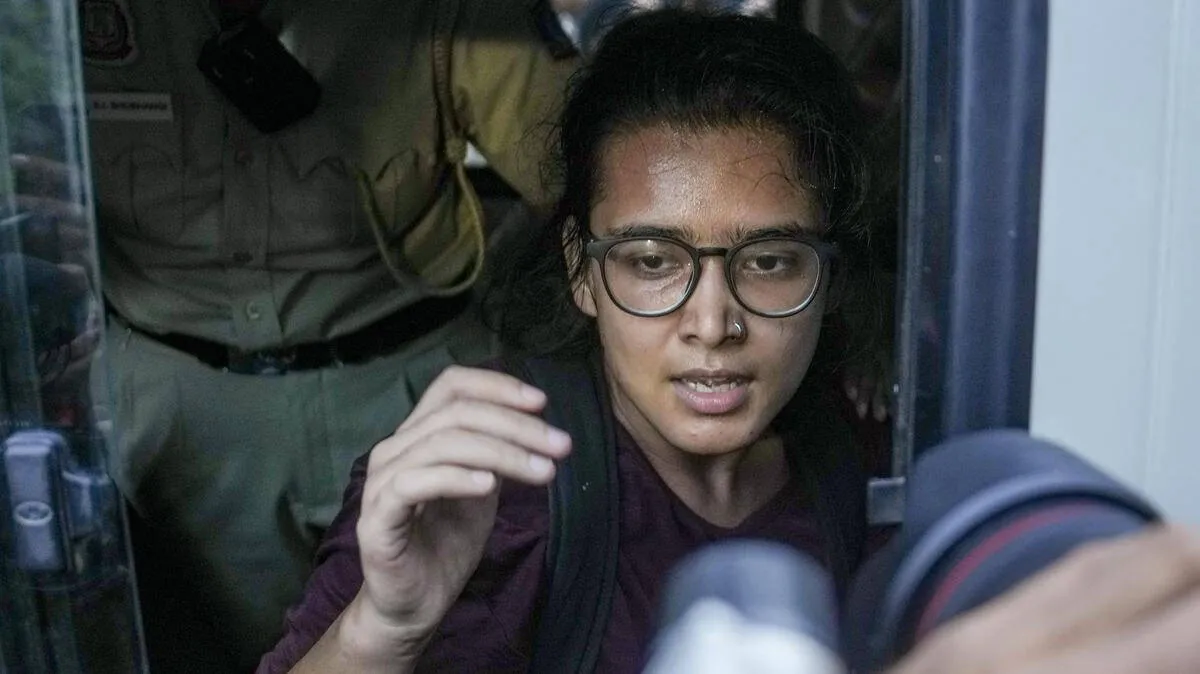
New Delhi: The Delhi High Court has dismissed a petition filed by Neha Bora, president of the All India Students’ Association (AISA), challenging a notice requiring her to furnish a personal bond of ₹10,000 and one surety to maintain peace. However, the court has directed the Special Executive Magistrate (SEM) to provide her with relevant information and documents connected to the proceedings.
The matter came before Justice Subramonium Prasad on Friday. While declining to entertain the writ petition at this stage, the court issued directions to ensure that Neha receives the relevant material relating to the case.
Why Did Neha Bora Approach the Delhi High Court?
Neha Bora had challenged a notice issued on October 17, directing her to appear before the magistrate on October 19 and furnish a personal bond of ₹10,000 along with one surety to maintain peace.
The notice reportedly followed her participation in the ‘Lehra Do Tiranga’ march held in Delhi on October 16.
Under Section 126 of the Bharatiya Nagarik Suraksha Sanhita (BNSS), a magistrate may require a person to execute a bond for keeping the peace when there is sufficient information indicating a likelihood of a breach of peace.
Neha approached the High Court seeking to challenge the notice and the proceedings initiated against her.
What Did the Court Say?
During the hearing, Justice Subramonium Prasad dismissed the writ petition at this stage. At the same time, the court directed the Special Executive Magistrate to provide Neha with the relevant information and documents concerning the proceedings.
The direction means that the relevant material must be made available to her in accordance with the court’s order, even though her challenge to the notice was dismissed.
Neha Bora’s Arguments Against the Notice
According to the petition prepared by her lawyer, Abhik Chimni, the notice was challenged as vague and factually incorrect. Her side argued that it did not provide concrete facts or evidence establishing a likelihood of a breach of peace.
During the earlier hearing, her counsel also argued that citizens do not need prior permission merely to hoist the national flag. The lawyer further submitted that demanding a change of government is not, by itself, unlawful in a democracy.
These were arguments advanced on Neha’s behalf as part of her legal challenge.
What Happened During the ‘Lehra Do Tiranga’ March?
Neha Bora was reportedly detained preventively on October 16 while on her way to participate in the ‘Lehra Do Tiranga’ march in Connaught Place, Delhi. She was released on October 17.
Proceedings before the Special Executive Magistrate reportedly relate to allegations involving slogans at Mandi House, repeated protests near Jantar Mantar despite prohibitory orders, and allegedly encouraging people to join the demonstrations.
The proceedings also refer to prohibitory orders imposed under Section 163 of the BNSS.
These allegations form part of the proceedings and should not be treated as established findings of guilt.
What Happens Next?
Although the High Court dismissed Neha Bora’s petition at this stage, its direction to the Special Executive Magistrate to provide relevant case material remains an important part of the order.
The next steps will depend on the proceedings before the magistrate and the applicable legal process. The court’s dismissal of the petition should not, by itself, be interpreted as a finding that the allegations against Neha have been proved.
The case has brought renewed attention to the legal procedures governing preventive peace bonds, public demonstrations and the rights of individuals participating in protests.
Reader Discussion (0)
Leave a Reply
Your email address will not be published. Required fields are marked *