
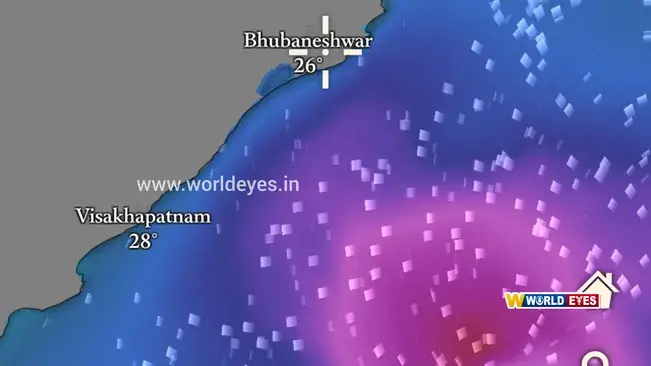
Andhrapradesh: Andhra Pradesh has stepped up its preparedness as Cyclone Arnab approaches the eastern coast, with landfall expected on October 28. As part of precautionary measures, railway authorities have announced the cancellation of 53 trains, several districts have declared school holidays, and the state government has released ₹27 crore for cyclone preparedness and relief operations, according to the information provided.
53 Trains Cancelled, Railway War Rooms Activated
South Coast Railway has announced precautionary changes to train services and established 24-hour war rooms at its zonal and divisional headquarters to coordinate emergency responses.
Passengers have been advised to check official railway announcements before travelling, as services may be affected by the developing weather situation.
School's Closed in Several Districts
Authorities have announced holidays for educational institutions in several coastal districts due to forecasts of heavy rainfall and strong winds.
Visakhapatnam, Kakinada and Dr B.R. Ambedkar Konaseema districts have declared holidays for October 27 and 28. In Anakapalli, schools will remain closed from October 27 to 29.
Cyclone Expected to Cross the Coast on October 28
According to the India Meteorological Department (IMD), Cyclone Arnab is expected to cross the Andhra Pradesh and Yanam coasts between Bapatla and Visakhapatnam by the forenoon of October 28.
The system is forecast to intensify into a very severe cyclonic storm, with sustained wind speeds of 115–125 kmph and gusts reaching up to 140 kmph. Heavy to extremely heavy rainfall is expected in parts of coastal Andhra Pradesh on October 27 and 28. The system may also affect Telangana and neighbouring states after landfall.
Chief Minister Directs Officials to Remain on Alert
Chief Minister N. Chandrababu Naidu has directed officials to maintain round-the-clock vigilance, activate control rooms and coordinate preparedness measures across departments.
Authorities have also been instructed to alert residents in vulnerable coastal areas and facilitate their relocation to safer locations wherever necessary.
Residents are advised to follow official weather bulletins, comply with local administration instructions and avoid unnecessary travel during severe weather.
Reader Discussion (0)
Leave a Reply
Your email address will not be published. Required fields are marked *